Bonus #2 - Mastering Supporting Roles
Enhancing the Story

Supporting roles in film and TV are essential to enhancing the story and providing depth to the overall narrative. While the main characters often drive the plot, supporting actors play significant roles in supporting the lead characters, providing context, and adding layers to the story. Here are some ways in which supporting roles enhance the story:
Character Development: Supporting roles allow for the development of secondary characters who interact with the main characters. These characters often have their own story arcs and backgrounds, which contribute to the overall richness of the narrative. Through their interactions, the audience gains a deeper understanding of the main characters as well.
Conflict and Tension: Supporting roles frequently introduce conflicts or tensions that challenge the main characters. They can serve as foils or antagonists, pushing the protagonist to overcome obstacles and evolve. These conflicts add complexity to the story and create compelling dramatic moments.
Comedic Relief: Supporting characters often provide comedic relief, injecting humor into the story. Their witty remarks, eccentricities, or amusing situations lighten the mood and provide a welcome contrast to the more serious or intense moments. They bring levity to the narrative and help balance the overall tone.
Exposition and Backstory: Supporting roles can serve as vehicles for exposition, conveying important information or backstory to the audience. They may offer insights into the main characters’ past, motivations, or reveal crucial plot details. This exposition helps the audience better understand the world and the dynamics within it.
Emotional Impact: Supporting characters can elicit strong emotional responses from the audience. They may be written to evoke empathy, sympathy, or even dislike. Their presence and actions can heighten emotional moments in the story, creating a deeper connection between the viewers and the narrative.
Relationship Dynamics: Supporting roles often contribute to the development of relationships within the story. They may be friends, family members, or love interests of the main characters. Through their interactions, the audience witnesses the complexities of human relationships and how they shape the central characters.
Plot Advancement: Supporting characters can also drive the plot forward by initiating or participating in key events or subplots. Their actions or decisions can have significant consequences for the main characters and the overall story arc. They bring a sense of unpredictability and help maintain audience engagement.
Robin Williams
as Sean Maguire in
“Good Will Hunting”
(1997)

as Sean Maguire in
“Good Will Hunting”
(1997)
Marisa Tomei
as Mona Lisa Vito in
“My Cousin Vinny”
(1992)
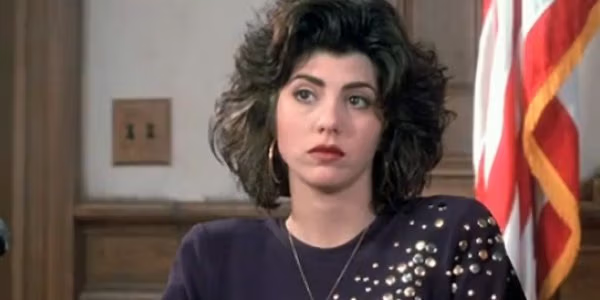
Tomei won an Academy Award for Best Supporting Actress for her comedic and scene-stealing performance.
Peter Dinklage
as Tyrion Lannister in
“Game of Thrones”
(2011-2019)

Dinklage’s charismatic and complex performance as the witty and intelligent dwarf earned him multiple awards.
Rhea Perlman
as Carla Tortelli in
“Cheers”
(1982-1993)
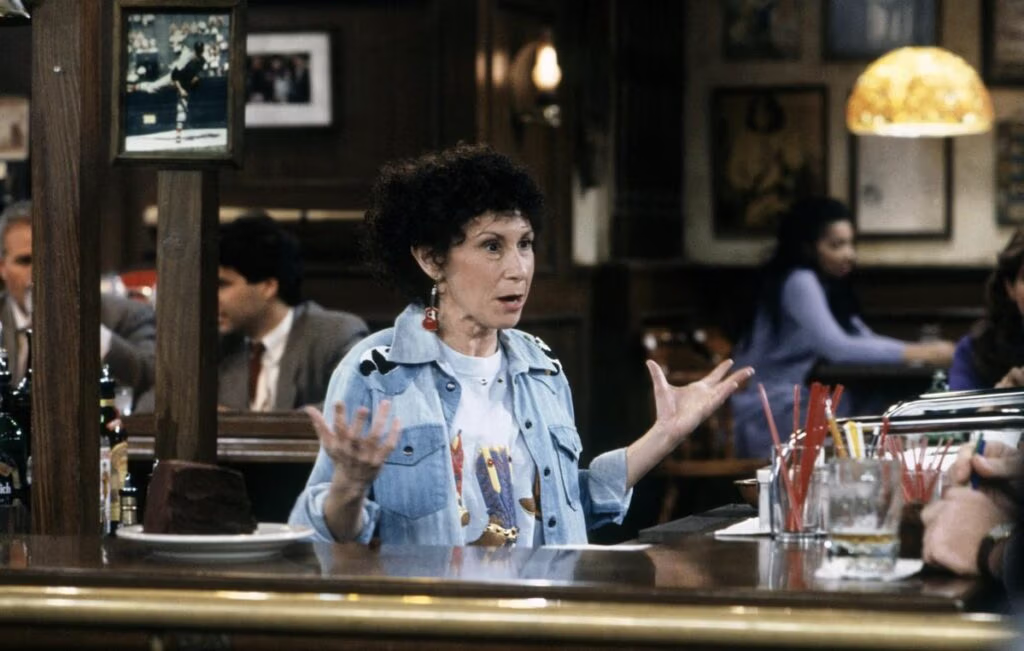
Perlman’s sassy and quick-witted portrayal of the bar waitress became an integral part of the show’s ensemble.